


/https%3A%2F%2Fcdn-tor.buminteractif.com%2F2026%2F01%2F22152223%2FGettyImages-456480020.jpg)
A fascinating window into life during the Jurassic period has just opened in Torotoro National Park, Bolivia. Paleontologists have recently described, for the first time scientifically, an exceptional site nicknamed a “dinosaur highway.” The Carreras Pampas site is home to a record concentration of fossilized footprints: no fewer than 16,600 tracks left by theropods, three-toed bipedal carnivorous dinosaurs. Located on what was once a muddy shoreline between 101 and 66 million years ago (towards the end of the Cretaceous period), the site covers approximately 7,500 square meters. The study, published in the journal PLOS One, reveals that Carreras Pampas contains more theropod footprints than any other site known to date. Until now, the record was held by another Bolivian site, Cal Orck'o, which has around 14,000 footprints dating back 68 million years. Dr. Jeremy McLarty, co-author of the study and director of the Dinosaur Science Museum in Texas, highlights the ubiquity of these tracks: “Everywhere you look on this rock layer, there are dinosaur footprints.”
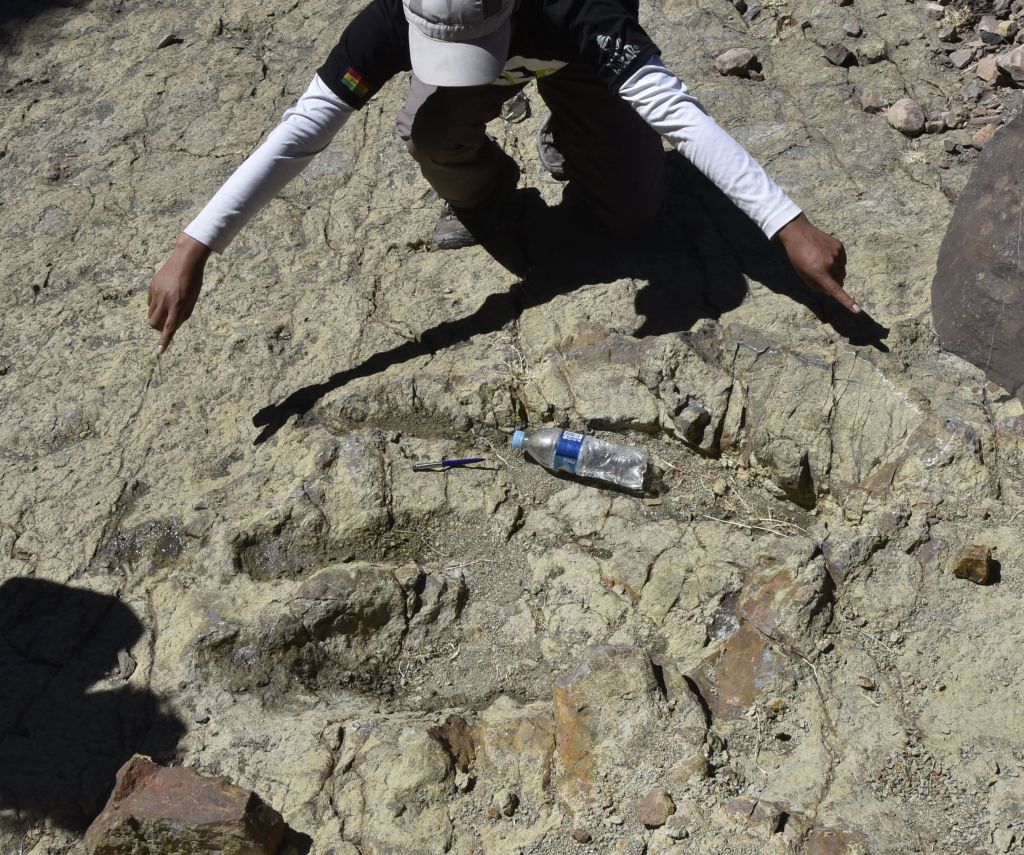
The analysis of these thousands of footprints offers much more than a simple census; it allows us to reconstruct the behavior of the animals “moment by moment.” Unlike bones, which show what an animal could do, tracks show what it actually did. Researchers observed that the majority of dinosaurs moved north/northwest or southeast. This uniformity suggests that the area served as a major thoroughfare, perhaps a migratory route connecting what is now Argentina, Bolivia, and Peru. The footprints reveal a wide variety of activities ranging from 1) walking and running, observed based on the spacing of the steps, 2) swimming, where 1,300 footprints show evidence of swimming in shallow water, and finally 3) physical interactions: some tracks include traces of tail dragging. The diversity of sizes is also striking, with hip heights ranging from 65 cm to 125 cm, suggesting the presence of multiple species or different age classes coexisting on the same shore. They shared this environment with birds, several hundred traces of which have also been identified.
The quality of the preservation is due to the nature of the soil at the time: deep, soft mud. Dr. Peter Falkingham, professor of paleobiology, explains that deep footprints are crucial because they record foot movement and soft tissue, providing biomechanical data that cannot be obtained from skeletons alone. However, this discovery raises an intriguing question for paleontologists: why are there so many theropods? It is common to find multiple tracks of sauropods (long-necked herbivores) because these animals lived in herds, similar to modern large herbivores. In contrast, theropods are predators, and carnivores do not typically travel in such large groups. The density of these predators at Carreras Pampas remains an ecological enigma that scientists will have to solve by comparing this site with other deposits in Bolivia. In short, Carreras Pampas offers us not only fossils, but a scene of life frozen in time. As Dr. Anthony Romilio notes, unlike bones, which can be moved after death, “footprints don't move.” When visiting this site, you can be absolutely certain that you are standing in the exact spot where, millions of years ago, vibrant and active wildlife roamed the landscape.
